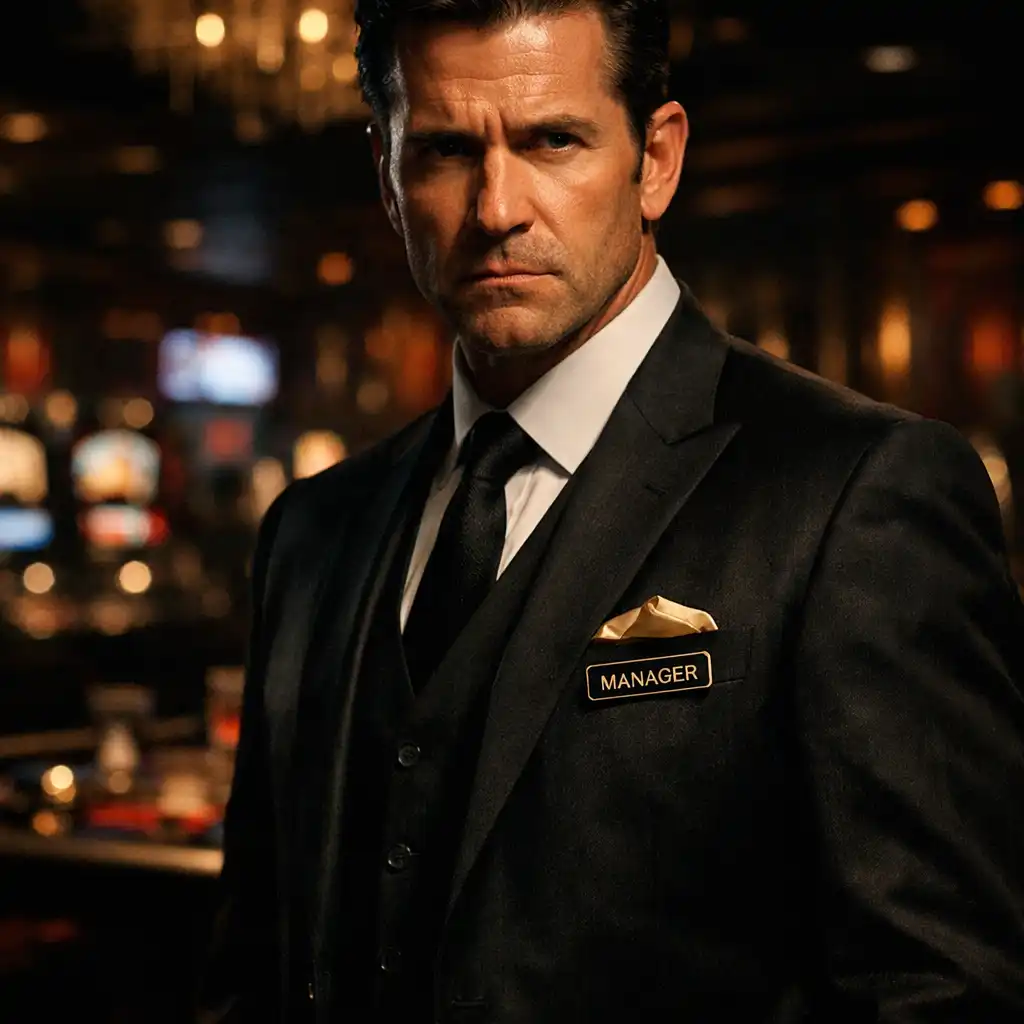
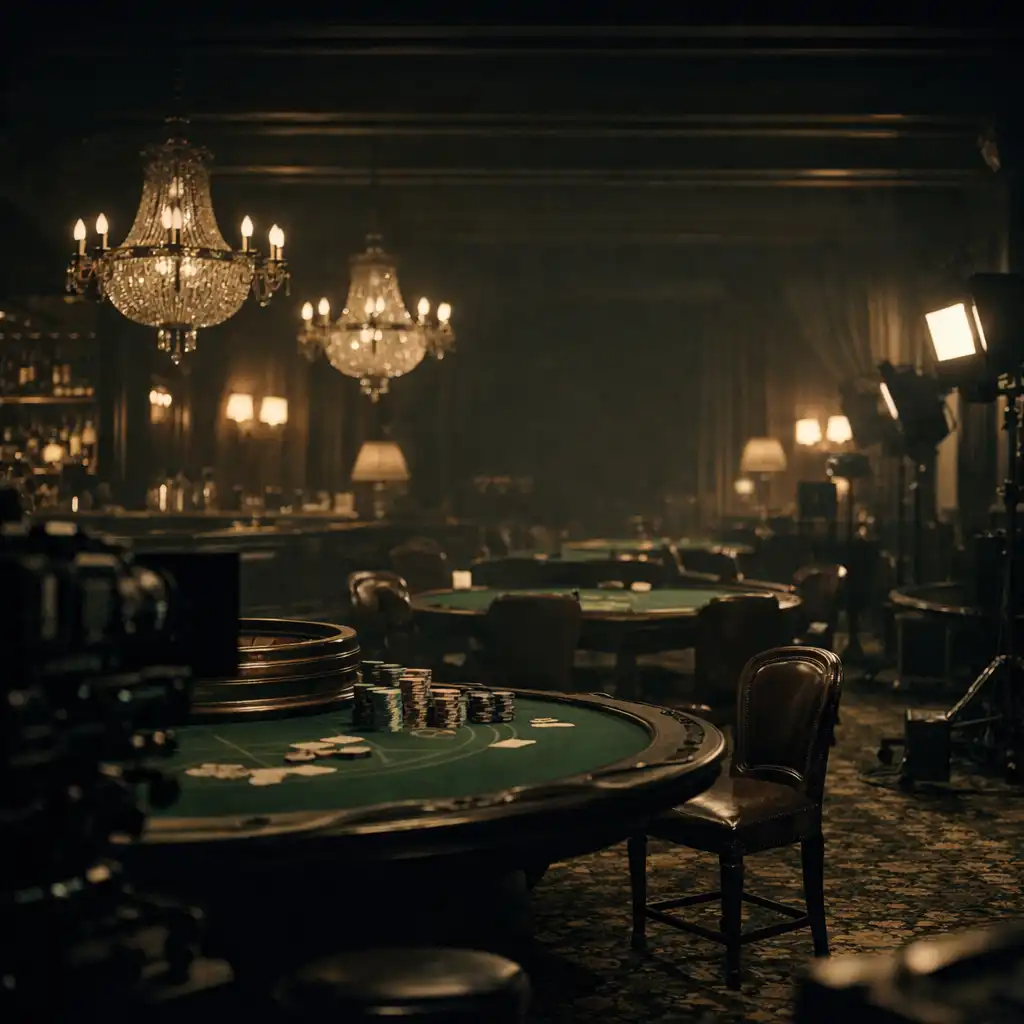
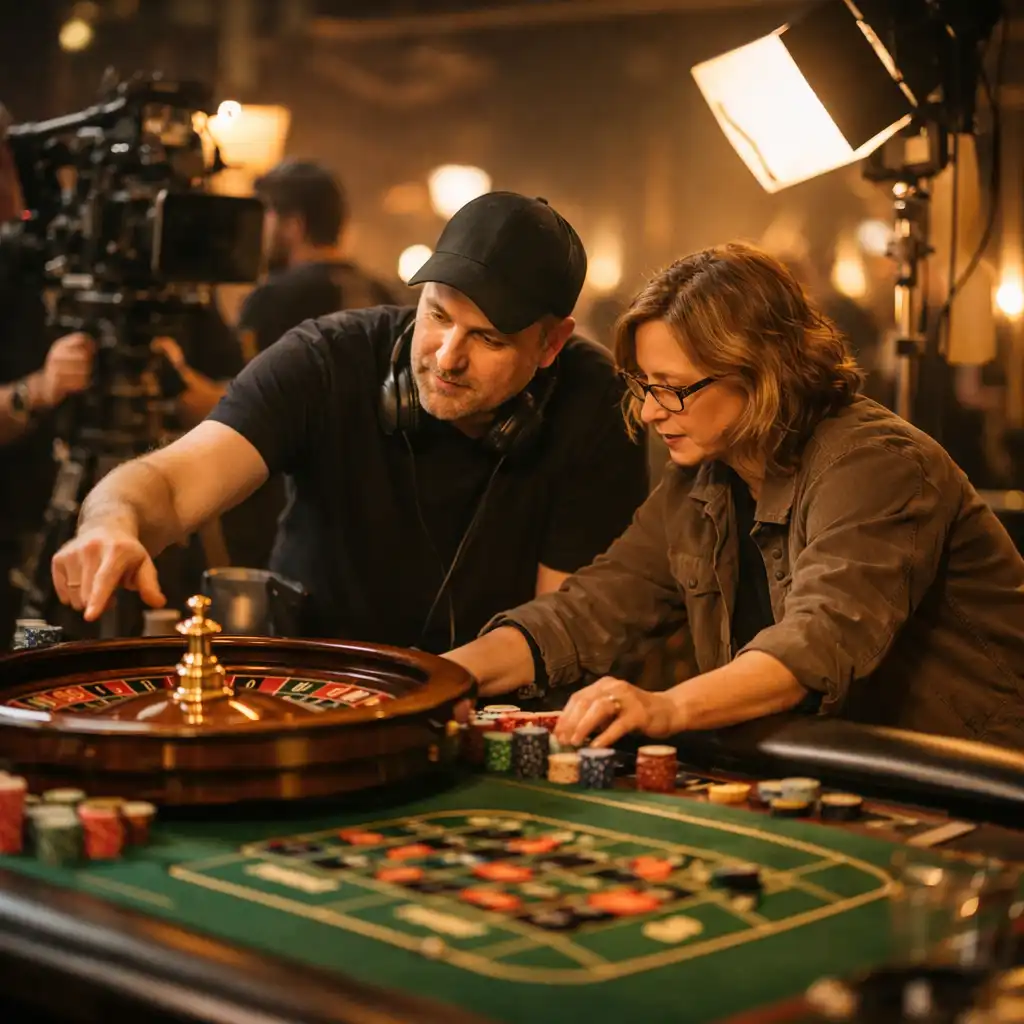
A dramatic film set designed as a luxurious casino interior with chandeliers and green felt tables

Behind the Velvet Rope

Casino Cinema Craft

Step inside the production of cinema's most thrilling casino films, where every card dealt and every chip stacked is a deliberate act of storytelling.

Explore set construction, lighting, and camera work that create tension.

Learn how directors and actors bring high-stakes drama to life.

Production Story Grid

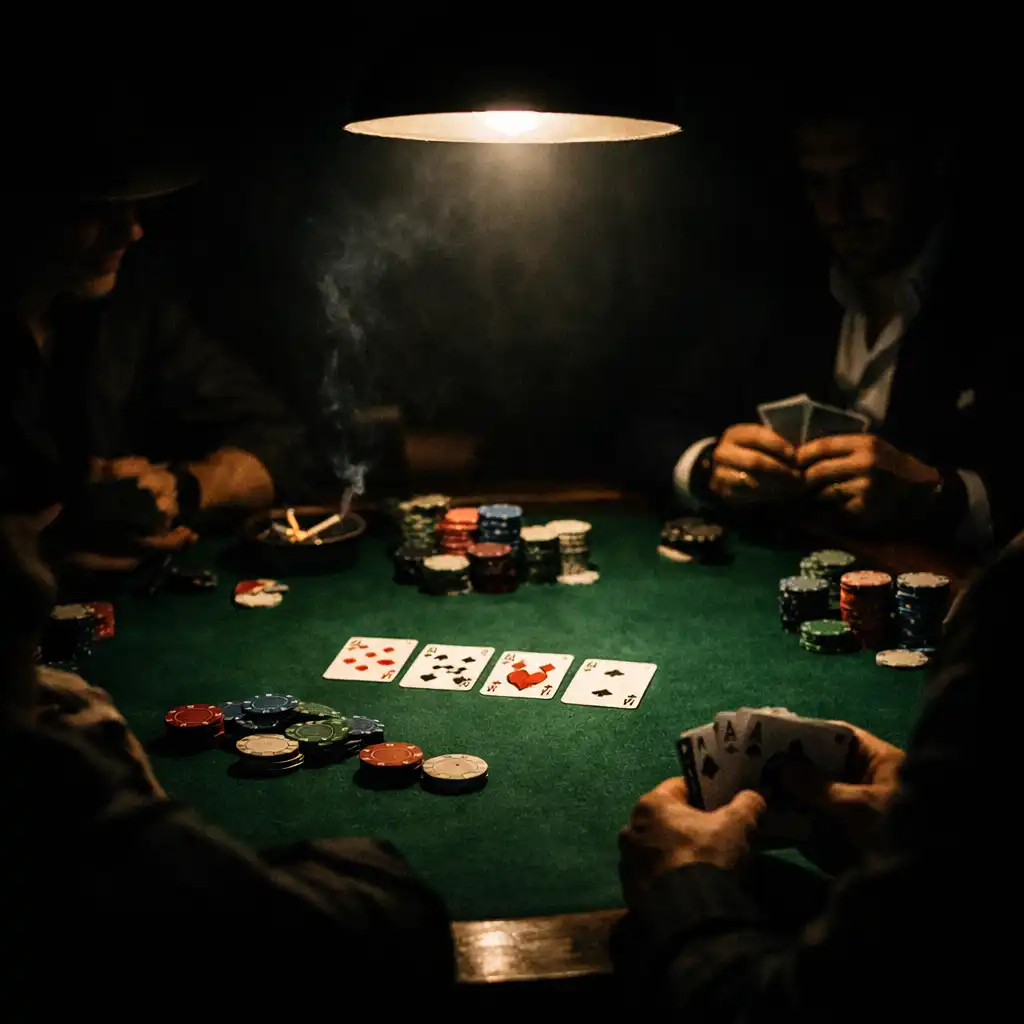
Poker scene with dramatic low-key lighting and a single overhead lamp illuminating cards and chips

Lighting the Tension in Casino Royale

Cinematographer Phil Méheux used low-key lighting and practicals to create the high-stakes poker game's claustrophobic intensity. The poker table was lit with overhead practicals, and shadows emphasized character isolation.

Casino Royale (2006) · Barrandov Studios

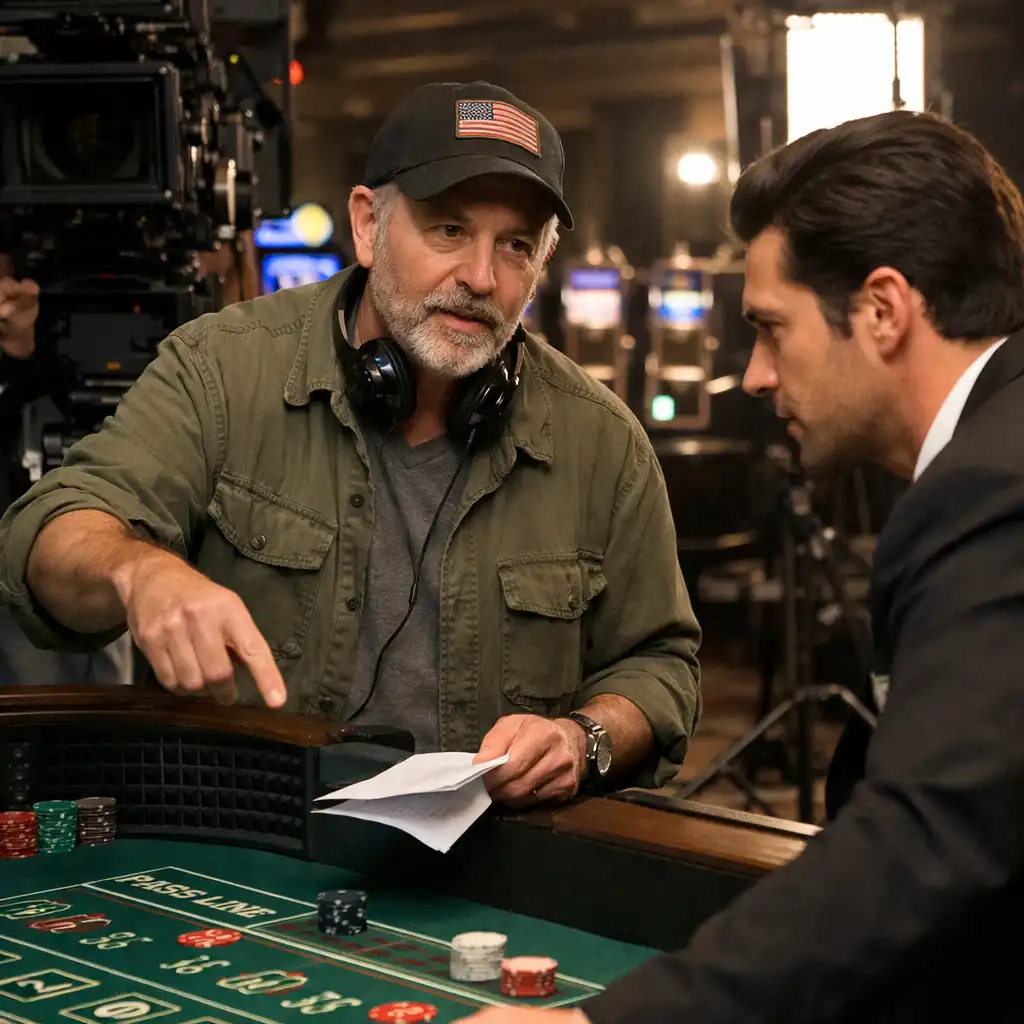
Technical advisor on a film set explaining details to an actor near a craps table

The Real Casino Consultant

Martin Scorsese hired Frank Cullotta, a former mob associate, as a technical advisor for Casino to ensure authenticity in gambling and violence. Cullotta also played a hitman in the film, and his insights shaped the portrayal of casino operations.

Casino (1995) · Based on Nicholas Pileggi's book

Close-up of hands shuffling poker chips on a table with a blurred smoky card room background

Practical Effects in Rounders

Rounders used real poker games with professional players as extras, and the actors learned to handle cards convincingly through weeks of training. Matt Damon and Edward Norton trained with poker pro Johnny Chan, and the final hand was choreographed for maximum drama.

Rounders (1998) · Credited with popularizing Texas Hold'em

"We wanted the audience to feel the weight of every bet, the danger in every glance. That meant getting the details right—the chips, the felt, the way the dealers moved."
— Martin Scorsese, Director of Casino

Production Timeline

1970s

The Gritty Realism Era

Films like The Gambler used location shooting and naturalistic lighting to portray the seedy underbelly of gambling. James Caan's performance was influenced by real gamblers, and locations included actual Las Vegas casinos. The Gambler (1974) was shot on location, giving the film a documentary-like authenticity.

1990s

The Glossy Blockbuster

Casino and Ocean's Eleven brought high production values, elaborate sets, and star power to the genre. Casino recreated 1970s Las Vegas on a massive scale with a $40 million budget, while Ocean's Eleven used practical sets and digital extensions to create a polished, glamorous world.

2000s–Present

Digital Precision

Modern casino films use digital cinematography and CGI to enhance realism and create impossible shots. Casino Royale's poker scenes used digital color grading to heighten tension, while Molly's Game (2017) used precise camera moves for card games, blending digital clarity with intimate close-ups.

Technique Spotlight: Cinematography

The Art of the Close-Up

Close-ups on cards, chips, and eyes are used to build suspense and convey the psychological stakes of gambling. Tight shots on hands and cards create intimacy, drawing the viewer into the character's decision-making process. Shallow depth of field isolates characters from the casino environment, making their internal conflict the sole focus.

In Casino Royale's poker scenes, cinematographer Phil Méheux used extreme close-ups on cards to reveal information selectively, controlling what the audience knows and when. This technique transforms a simple card game into a battle of wits, where every micro-expression becomes a clue. The camera becomes an active participant, withholding and revealing details to heighten tension.

Directors often pair close-ups with slow push-ins to increase pressure. As the camera moves closer, the background blurs, and the character's face fills the frame. This visual compression mirrors the emotional weight of the bet, making the audience feel the stakes as if they were sitting at the table themselves.

Actor Preparation

Dramatic portrait of an actor in character as a casino manager in a tailored suit

Robert De Niro in Casino

Sam "Ace" Rothstein

De Niro spent months studying real casino managers and practicing card handling to embody Sam 'Ace' Rothstein. He shadowed Frank Rosenthal, the real-life inspiration, and learned to deal blackjack professionally. His performance earned critical acclaim for its controlled intensity.

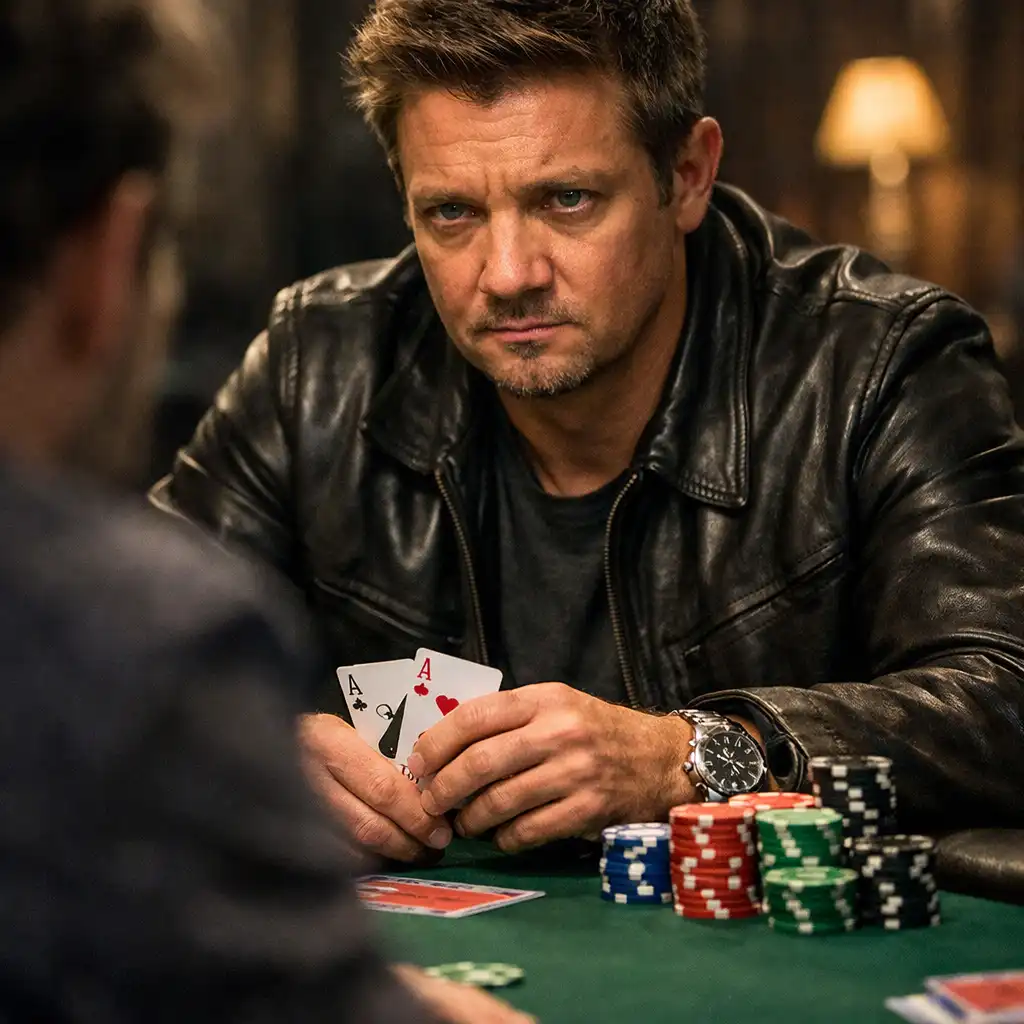
Portrait of an actor as a poker player seated at a table with cards and chips

Matt Damon in Rounders

Mike McDermott

Damon trained with poker champion Johnny Chan to convincingly portray a skilled player. He learned tells and chip tricks, and practiced reading opponents. His training lasted several weeks, giving his performance an authentic edge.

Portrait of an actress as a high-stakes poker game organizer standing confidently in a modern casino

Jessica Chastain in Molly's Game

Molly Bloom

Chastain studied the real Molly Bloom's memoir and interviews to capture her intelligence and resilience. She worked with a dialect coach and learned poker terminology. Chastain was nominated for a Golden Globe for her performance.

Set Design and Locations

From Soundstage to Strip

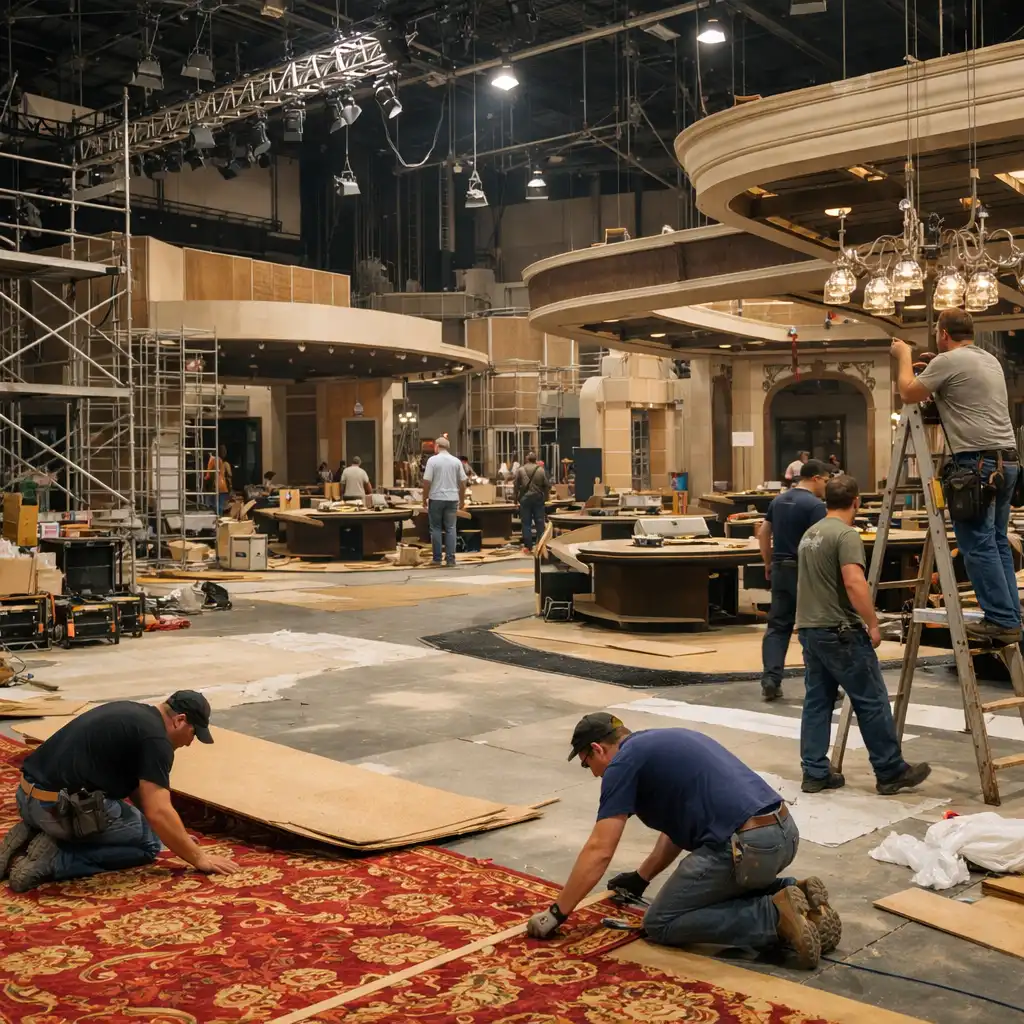
Casino films often blend real locations with constructed sets to achieve both authenticity and control. Casino recreated the Stardust casino on a soundstage, building one of the largest sets ever constructed for a film. Ocean's Eleven used the actual Bellagio for exterior shots, grounding the story in a recognizable Las Vegas landmark.

The choice between location and set is a creative decision that shapes the film's tone. Real locations provide texture and spontaneity, but they come with logistical challenges like noise, crowds, and limited shooting hours. Constructed sets offer complete control over lighting, camera movement, and set dressing, allowing filmmakers to craft every detail for maximum impact.

Wide shot of a casino set under construction with scaffolding, half-built walls, and workers placing carpet and lighting fixtures
The Stardust set in Casino was one of the largest ever built, recreating 1970s Las Vegas in meticulous detail.

Explore More Casino Cinema

Dive deeper into the world of casino movies with our reviews, plot summaries, and iconic scenes.

Browse Movie Reviews Iconic Casino Scenes